It was a passion for whisky that led to us to establish the Faer Isles Distillery, but from the very beginning we wanted to explore all the opportunities that the Faroe Islands provide: Nature, botanicals and culinary traditions, in order to distil the essence of the Faroe Islands. This is why we also produce vodka, gin and akvavit.
AKVAVIT
The spirit of
the islands
The native spirit of the Faroe Islands is aquavit – or akvavit, as it is spelled here. It is a traditional Nordic/Scandinavian distilled spirit flavoured mainly with caraway or dill. But nowhere in the Nordic region are the traditions around akvavit as strong as on the Faroe Islands. Here it is enjoyed by young and old at almost every festive occasion, from birthday parties to weddings and family dinners, particularly with traditional Faroese food. A favourite local tradition is for the host to serve akvavit as a welcome drink to all arriving guests at the front door, using a communal glass, which is shared by all the guests.
Inevitably, akvavit was our choice for the first ever spirit to be produced by the Faer Isles Distillery in 2021.
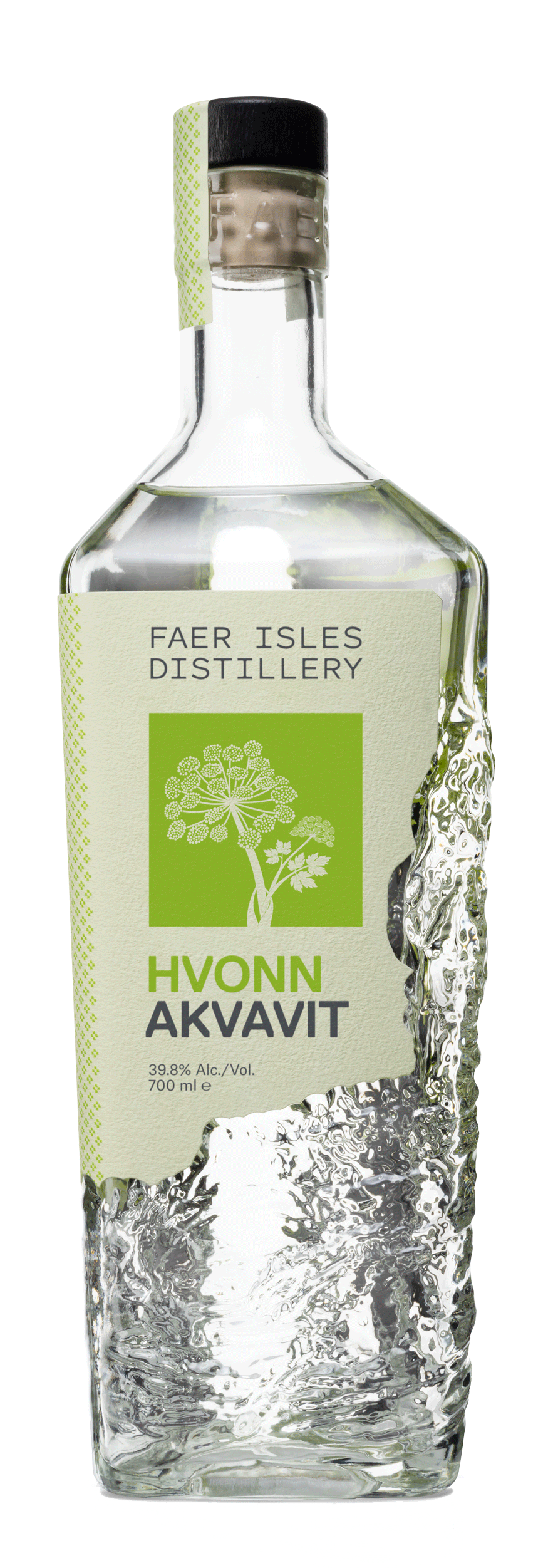
We used the local “hvonn” (Angelica) plant as the signature ingredient, since it fits well with our philosophy of “using Faroese traditions with a modern, innovative approach.” Hvonn has a historic significance and cultural importance in the Faroe Islands, being a rare source of vitamins on islands, and there is a strong tradition of making “hvannsnaps”, akvavit with hvonn.
GIN
Maritime, fresh and nutty
Next was our gin. This started our love affair with seaweed, which has become a major part of our brand identity and several recipes. Seaweed grows in abundance in the very fertile waters surrounding the islands and offers many exciting flavours and characteristics – not least the oceanic flavours that we always try to integrate into our spirits. We have experimented with 8 different varieties of local seaweed, and since we cooperate with a local seaweed farm “Tari”, we ensure full sustainability and do not disturb the local eco-sphere.
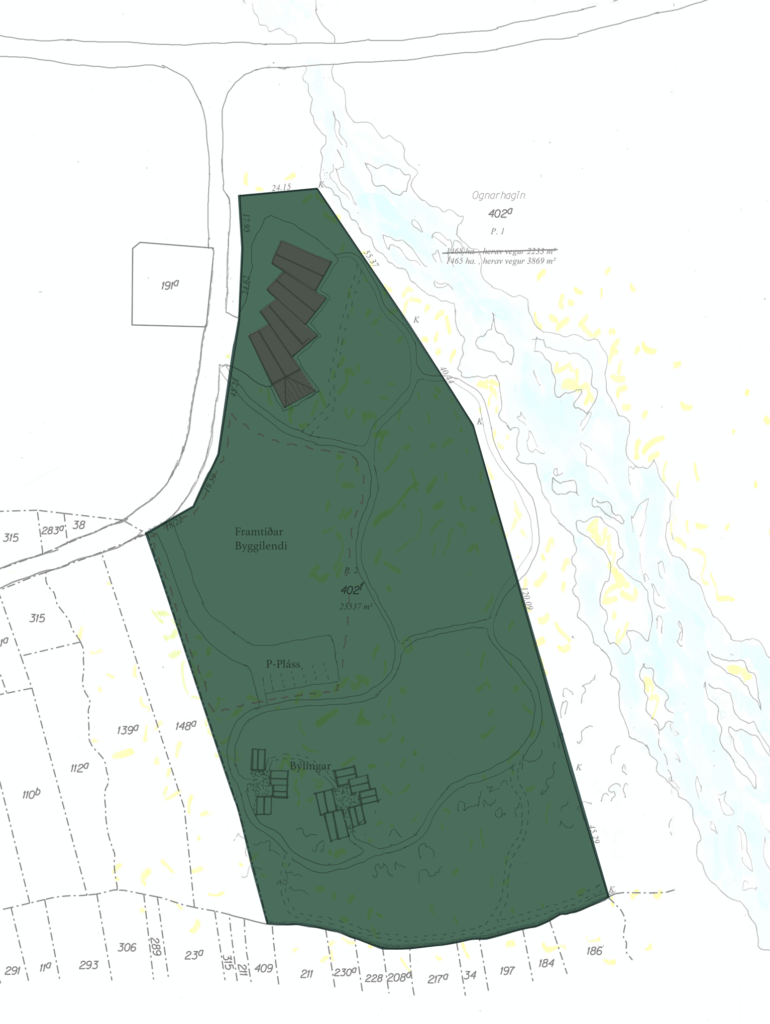
of land surrounding the whisky warehouses in Kvívík have been fenced in to keep sheep out, bring back the native flora, and grow local botanicals.
140
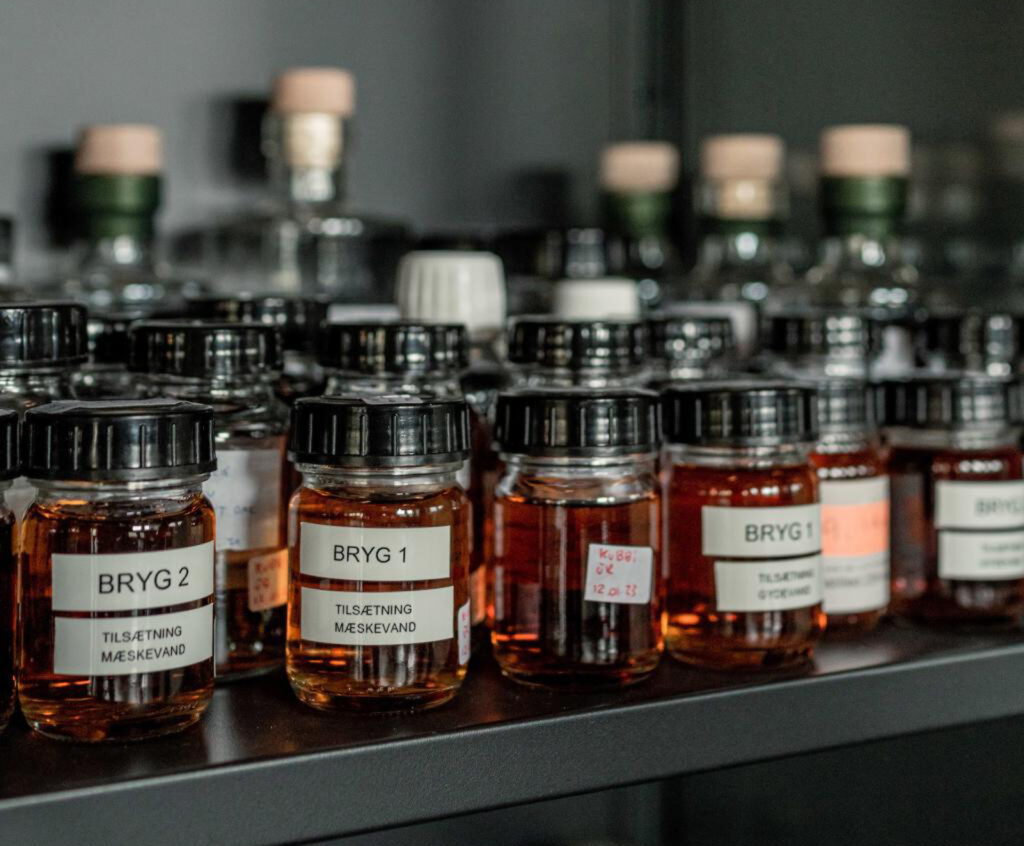
local botanicals macerated, assessed and used to develop new spirit recipes.
The goal is to provide a supply of native botanicals that we can study and use in our spirits.
These stormy islands in the middle of the North Atlantic Ocean, have a harsh climate ranging from tranquil and sunny to turbulent winds and torrential rain, which the native flora must cope with. The local population of 70,000 sheep add another constraint on the native flora. Therefore, we cannot just forage botanicals in the wild as is possible elsewhere.
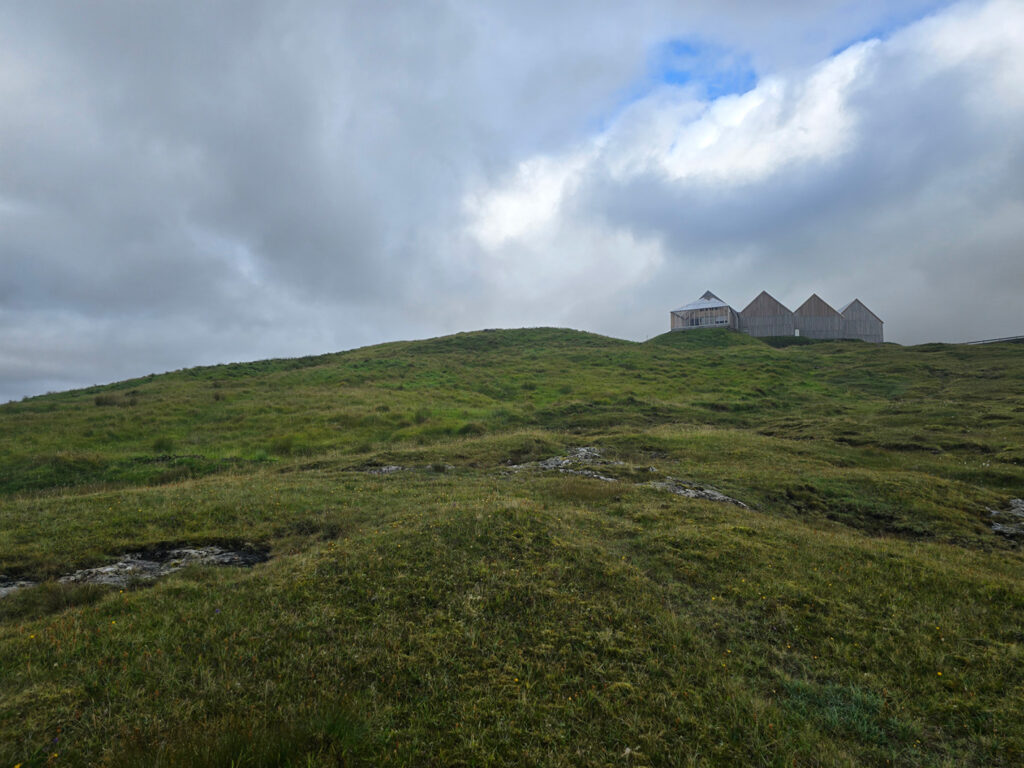
This is why we bought 24,000 m2 of land surrounding our whisky warehouses in Kvívík, overlooking the magnificent ocean and islands. This area has now been fenced in to keep the sheep out, and to start a project with a dual purpose: 1) rewilding and 2) planting local botanicals.
We want to provide a supply of native botanicals that we can study and use in our spirits. We already have a unique collection of 140 local botanicals that have been macerated, the flavours extracted and assessed. This collection, which was started by local pioneer chef, Leif Sørensen, is now utilised to develop new spirits recipes.
Additionally, by planting and cultivating selected botanicals, we can reduce our dependence on imported botanicals. This unique project on the islands, the first of its kind, will be carried out in collaboration with several local educational institutions and authorities, including the Environmental Protection Agency.
One such botanical will be Juniper, which is actually the only compulsory botanical when producing gin. Juniper used to be abundant on the islands, but due to climate change and sheep grazing, it is now very scarce. Consequently, we are creating an arboretum for Juniper on our protected area, which is a joint project with the local Forestry Services.
This will result in a botanical garden, which will serve as a living museum for visitors wishing to explore the extraordinary flora of the Faroe Islands.
SIGNATORY INGREDIENTS
Distilling the Faroe Islands
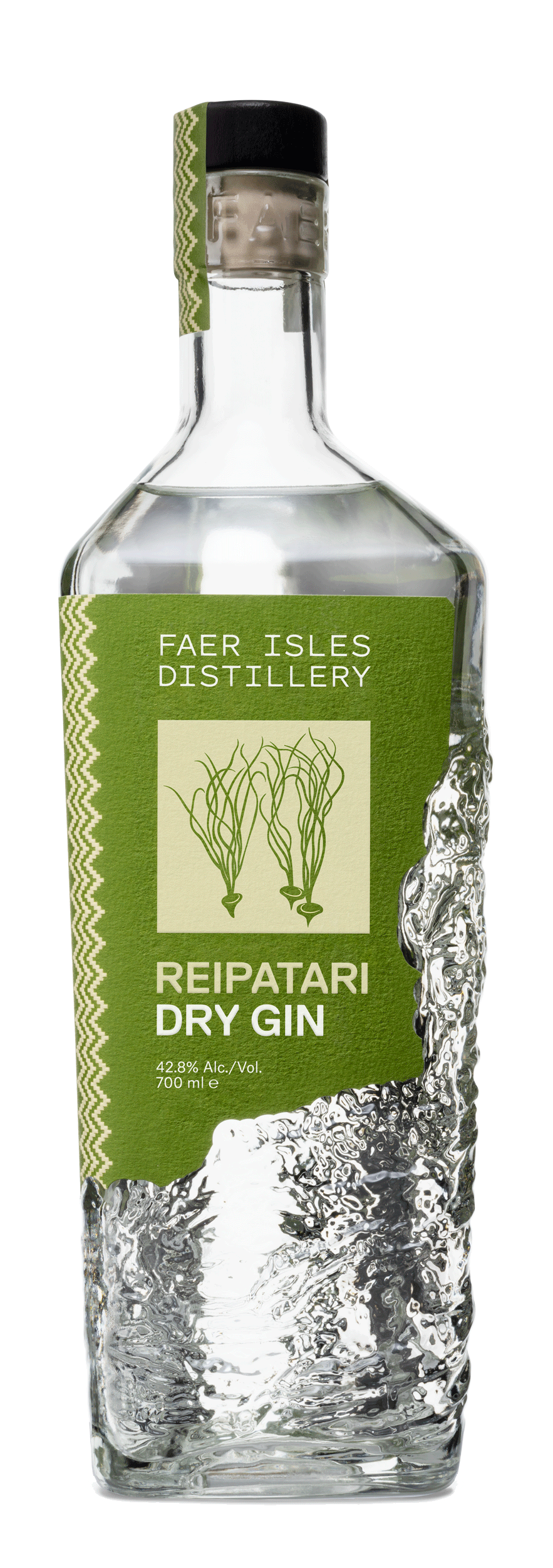
REIPATARI
Oceanic nutty flavours.
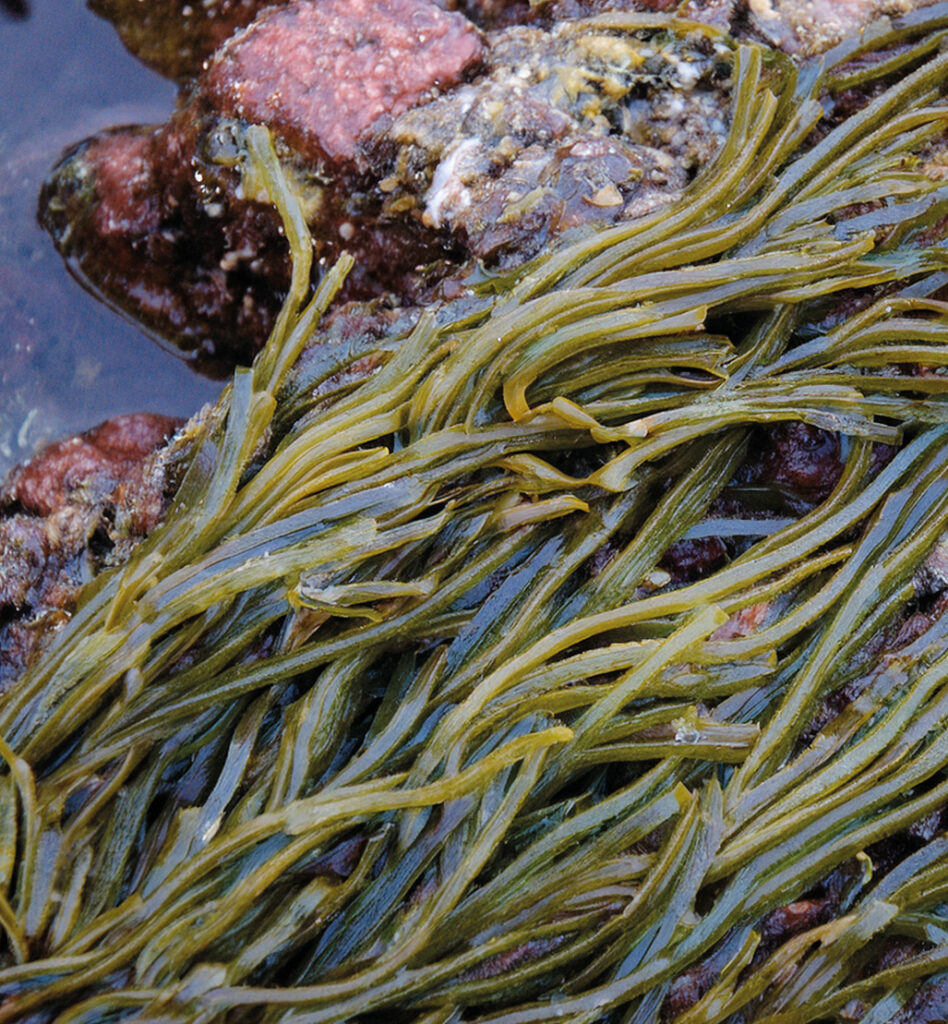
(Himanthalia elongata) A local seaweed with fresh and nutty flavours.
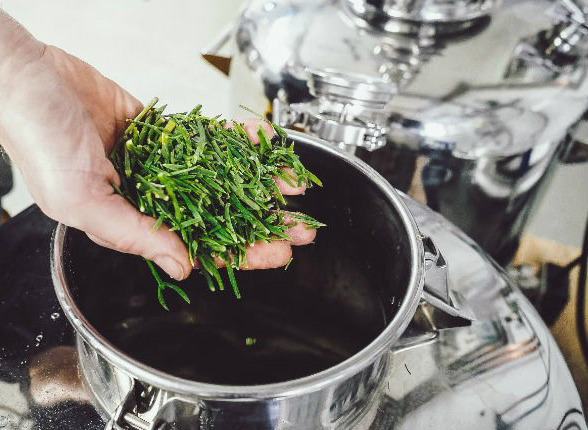
Seaweed grows in abundance in the fertile waters surrounding the islands and has become a major part of the distillery brand identity and recipes. Seaweed is a highly sustainable natural botanical with complex flavors. We get our seaweed from the local seaweed farm, Tari, where it is grown by the Ph.D. and pioneer in seaweed utilization, Agnes Mols Mortensen.
Having experimented with many different local seaweeds, Reipatari (Himanthalia elongata) was selected as a signature ingredient in our dry gin, due to its nutty and fresh taste, but it is also used as an ingredient in several of our other spirits. Its long, stringy thongs can become up to two meters high and tower beautifully on the seabed.
HVONN
Vitamin Saviour.
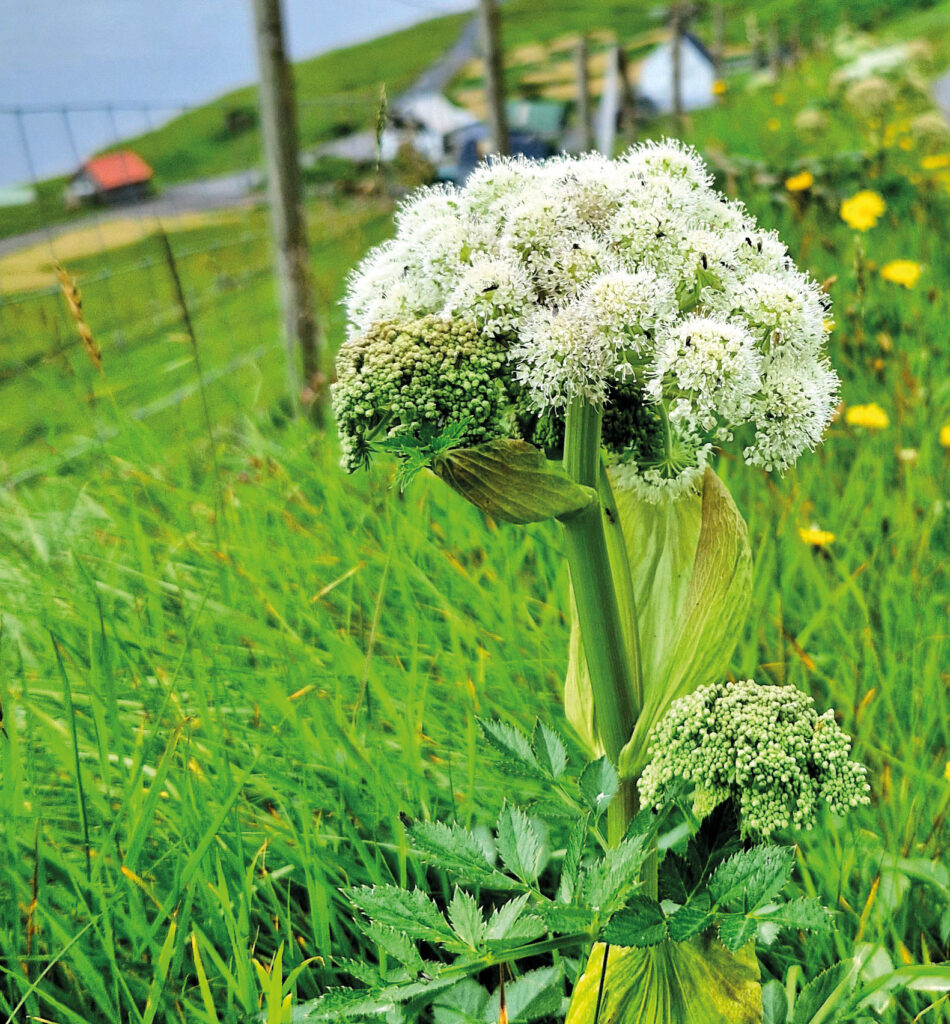
(Angelica archangeliga) Grows in the Arctic and was a vital vitamin source for the Vikings.
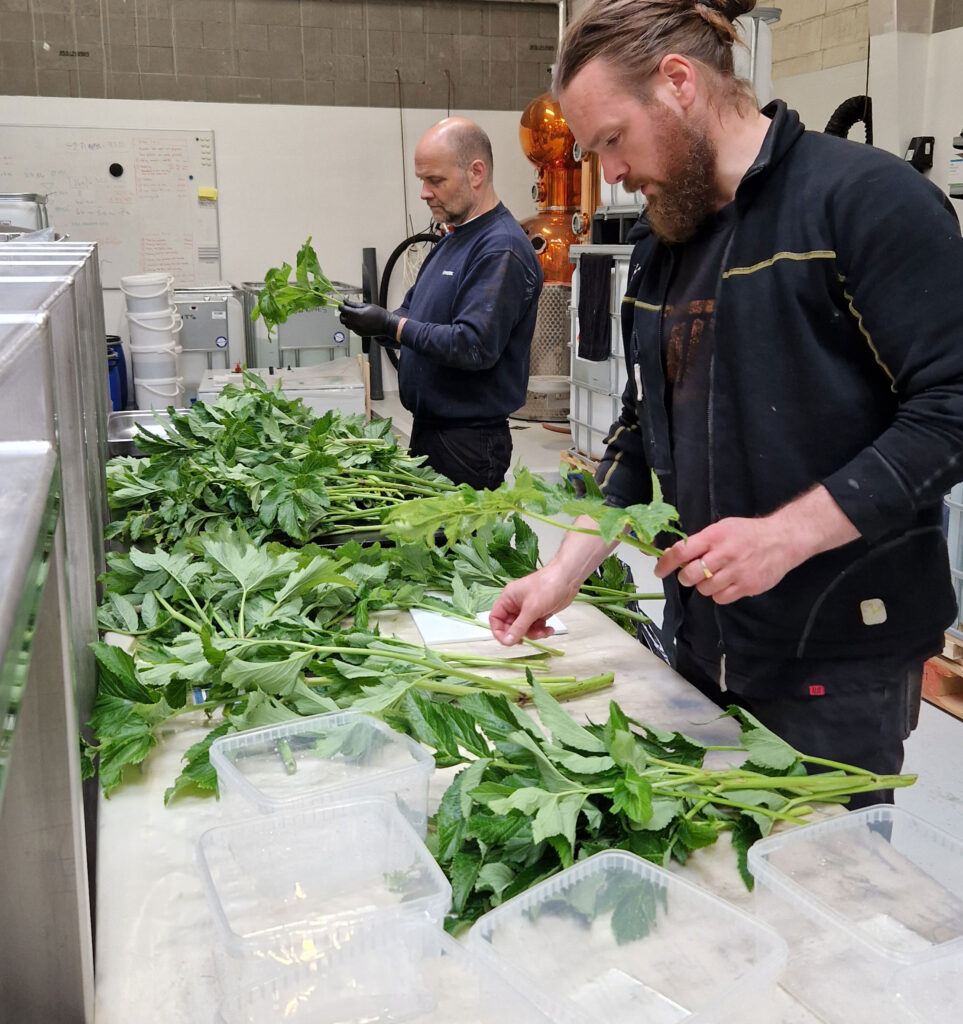
Hvonn (Angelica archangelica) is a native plant in the entire Arctic Area, known for its complex flavors. It was an important source of vitamin C on the Faroe Islands, which was a very scarce resource due to the rough climate. Cultivated in special “hvanngarðar”, it was also highly appreciated for its sweetly scented edible stems and roots and has traditionally been used to flavor the traditional spirit: akvavit. It is also called wild celery due to its similar flavour, but the dried root has an anise-like flavour.
In the mainly grassy heathers on the Faroe Islands, it looks impressive, as it can become 2.5m high and even grows on cliff ledges and is then called “bjargahvonn”.
Seaweed grows in abundance in the fertile waters surrounding the islands and has become a major part of the distillery brand identity and recipes. Seaweed is a highly sustainable natural botanical with complex flavors. We get our seaweed from the local seaweed farm, Tari, where it is grown by the Ph.D. and pioneer in seaweed utilization, Agnes Mols Mortensen.
Having experimented with many different local seaweeds, Reipatari (Himanthalia elongata) was selected as a signature ingredient in our dry gin, due to its nutty and fresh taste, but it is also used as an ingredient in several of our other spirits. Its long, stringy thongs can become up to two meters high and tower beautifully on the seabed.
SUBSEA WATER
Ancient water raised from the deep.
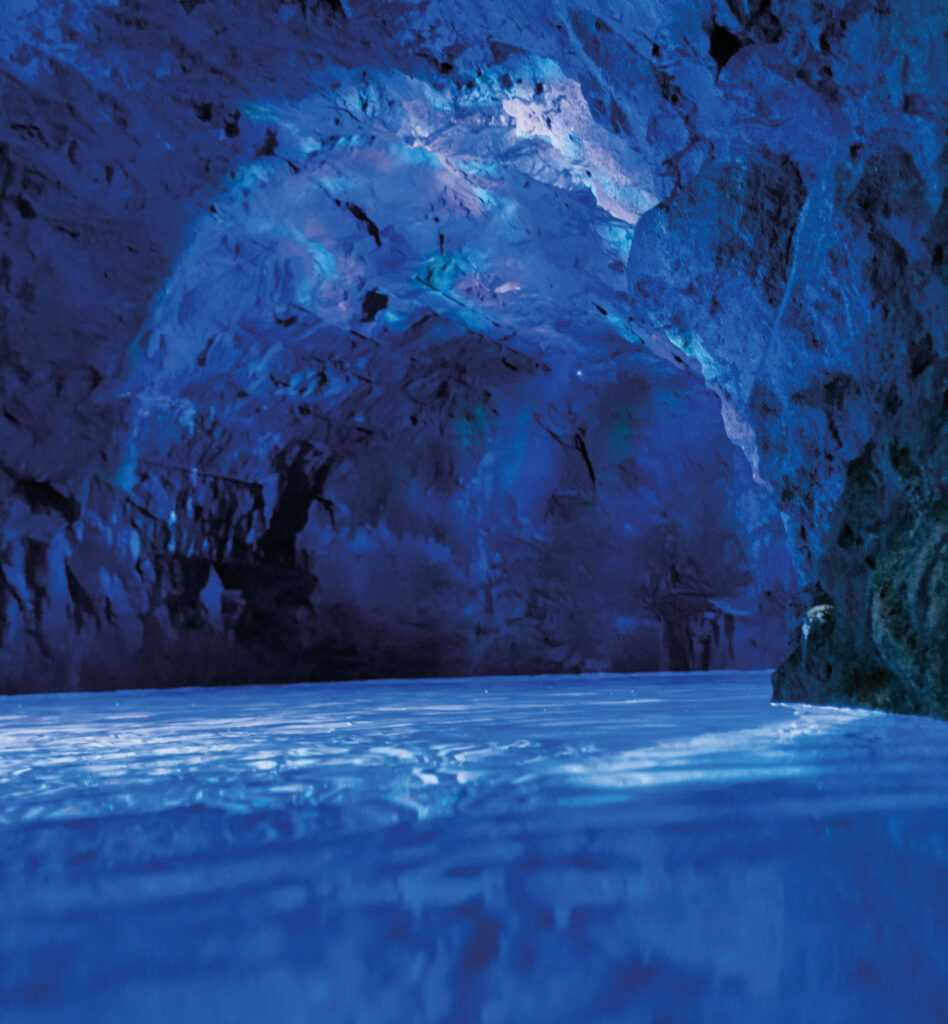
Fresh water tapped from a million-year-old reservoir below the seabed of the North Atlantic Ocean. Filtered through layers of rock deep below the ocean.
The water has a salinity that many mistakenly attribute to sea water leakage into the freshwater reservoir. But the water actually picks up salts when it is filtered through the bedrock, together with a lot of minerals. This causes the crystallizations that you find on the inside of the vodka bottles, once they are emptied.
In addition to the vodka, we also use the mineral-rich subsea water as dilution water for a few of our whisky casks, where the water adds notes of tropical fruits such as pineapple and mango.
OCEAN TRUFFLE
Truffles at the bottom of the sea.
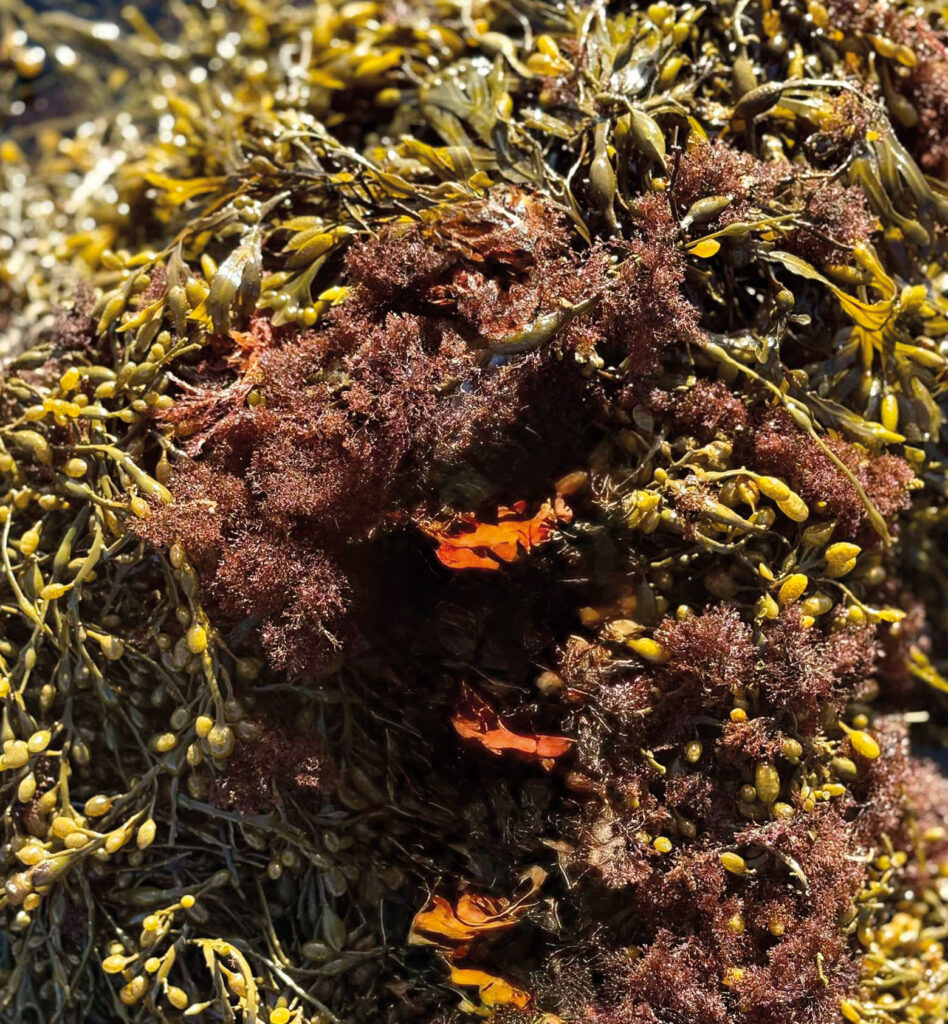
(Vertebrata lanosa) Rare and potent with strong truffle flavour.
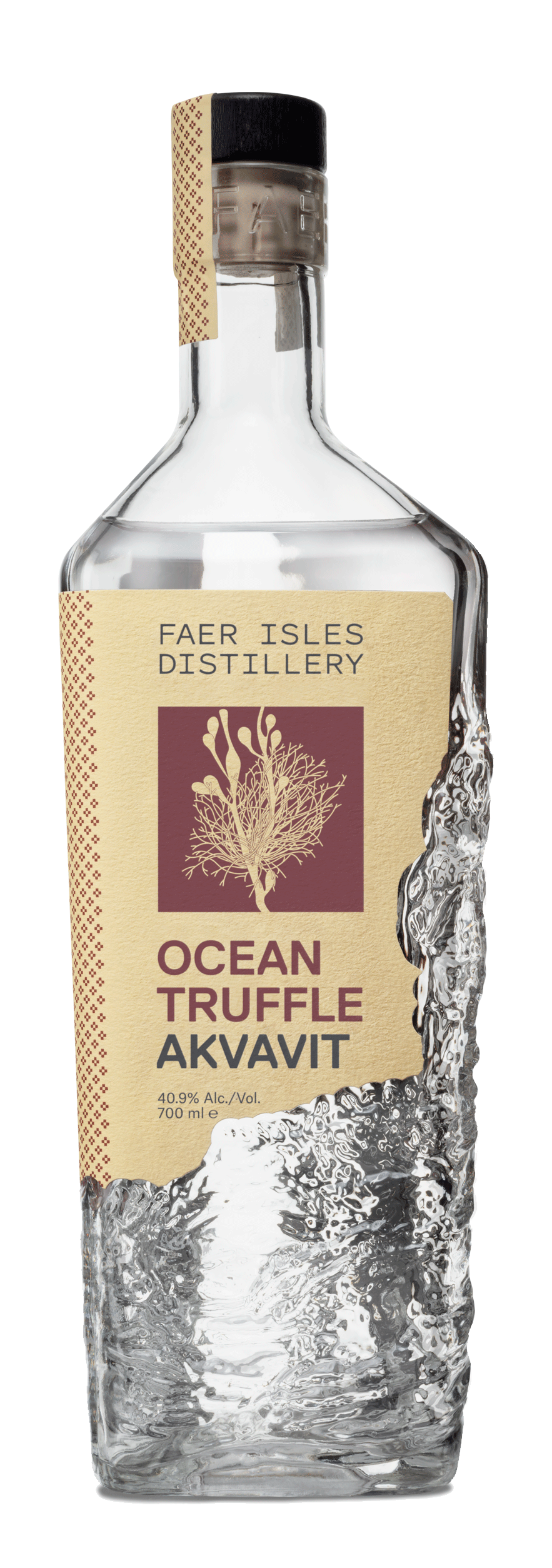
Ocean Truffle (Vertebrata lanosa) is a rare type of seaweed that grows in the sea around the Faroe Islands. It is actually an algae that grows on other seaweed and thus cannot be farmed but must be foraged by divers. Luckily, the flavor is very potent, so we need only very little of it to create the unique flavor of this akvavit
In its dried form it is also used in Iceland and Norway as a seafood flavor enhancer, but we are the only spirits producer in the world that uses it for spirits. And finding the right balance has been a challenge. We spent 5 years developing it, where we tried drying, distilling, macerating, fermenting it (and a combination of several) to reach perfection.
Since it is only harvested once a year (February/March) and always is a sustainable way, this is a scarce resource, and supply of the Ocean Truffle Akvavit is limited.